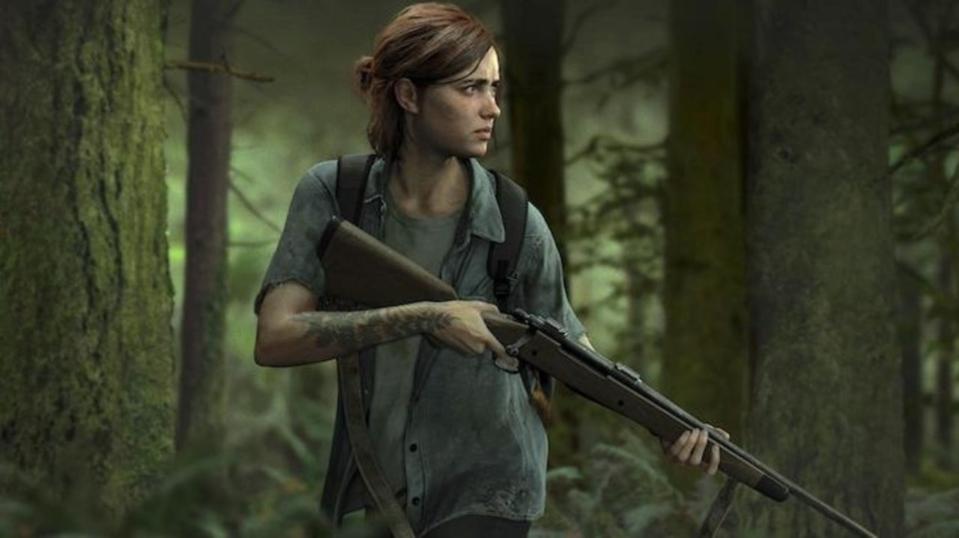
I do not know what the team at Naughty Dog changed between the games, but I can say in all honesty that the Last of Us Part II’s combat is outstanding, rising out of any issues from the first with a flair of bloodlust and emotional power.
Developing an appreciation for The Last of Us Part II
N.B. vague spoilers for both games throughout
The Last of Us Part II is arguably one of the most moving, powerful pieces of media of the past century. In an era focused upon expansive open worlds and huge stories, Neil Druckmann and his team have created an intimate, personal pair of intertwining stories, whilst equally capturing all the feeling of exploration and scale we expect in AAA titles.
Moving on from The Last of Us
The Last of Us is often hailed as one of the most influential games of all time. In just the first few scenes of playing the game, I had experienced one of the most moving scenes in not just a videogame, but in media as a whole. It is fair to say that the story of Joel and Ellie will forever be etched into the history of gaming, and indeed it deserves its place; the mixture of intense emotional scenes with deeply integrated gameplay systems was revolutionary, and gaming today would not be same had this work not been released.
With this reputation then, I think it comes as no surprise that people were both overjoyed at the prospect of a sequel, but equally heavily sceptical. How could Naughty Dog follow up on such a masterpiece? Did simply the existence of a sequel undermine the message of the first? But equally, was the message of the first exactly what we thought it was?
The ending of The Last of Us was arguably the most impactful, troubling moment in the story, and the discussion over it, and its message, is endless. The ambiguity of morality perspective here, paired with the excellent performances from Troy Baker and Ashley Johnson and the stellar animations for the time, makes for one of the deepest endings in gaming history.
But no longer is it an ending, and no longer is the morality of Joel’s behaviour truly ambiguous. Does that undermine the principles of the work? I think not. The progression of the story into the sequel is natural, and I feel that much of the struggle the audience had with how the events of the first game were handled in the second were due to the pain we saw in the characters in the fallout from it. Perhaps the openness of the first’s ending and how it encouraged fans to continue the story in their minds in individual ways contributed to this, as finding out the reality of something one imagined a different way is often heart-breaking. I see this as a testament to the value of these games.
In fact, that which we saw as an ending marked a new beginning, however short it turned out to be for the pair. As Nath of the PlayStation Access YouTube channel highlighted in his glowing praise of the game, (which you can find here) ‘Now that I have seen the game through, this does feel more intrinsically connected to the original than a typical sequel – it feels like a Part II’. The world of The Last of Us was begging to be explored more, the character’s stories asking to be told, the gameplay asking to be more brutal, more disturbing, more… real. And with the Last of Us Part II, we were given just that.
The Gameplay of the Last of Us Part II
The combat of the Last of Us Part II is perhaps the most crucial part of its excellence as a videogame. Perhaps even further than this, you could say that the Last of Us Part II’s story wouldn’t be the same without this gameplay, because the two are so heavily interwoven that to take one away would tear apart the very essence of the game.
Playing the Last of Us Remastered on PS4 in 2020, I could not help but feel a frustration with the at times slightly dated combat mechanics, and I struggled to truly connect to Joel in gameplay heavy portions of the game. Going into what I knew was a longer experience in Part II, I was worried that I would get tired of the gameplay, which had been cited as barely changed. That worry proved needless.
I do not know what the team at Naughty Dog changed between the games, but I can say in all honesty that the Last of Us Part II’s combat is outstanding, rising out of any issues from the first with a flair of bloodlust and emotional power.
It is almost humorous how the ludo-narrative dissonance associated with the ‘Uncharted’ franchise’s trigger-happy cover-based shooter mechanics is such a contrast to the role of combat in the Last of Us. As all the characters you play as in Naughty Dog’s post-apocalyptic tale, the grisly, violent melee and impactful shooting feel so in brand, so ‘Joel’, so ‘Ellie’, and so ‘Abby’. Every moment of combat I felt was necessary, every overly aggressive moment felt overly aggressive, to a point of almost disapproval of the revenge warpaths we play through, and every drawn-out segment ended just as the thought of stopping started to creep in. This pacing I feel created similar issues in the audience as Hideo Kojima’s ‘Death Stranding’, with it seeming to some that we were carrying out chores. However, for me, this ability to play with the mind of the player and pull away just as it would overwhelm is absolutely masterful and shows a true understanding of both how games work, but how they can move forwards.
The crux of this series is stealth, and the sequel does not disappoint. With expanded areas to take down your enemies as they patrol comes an expanded arsenal, most notably the introduction of silenced guns, which are perhaps the biggest game changer in the stealth segment of the game, as you drop targets from behind cover and watch the enemies panic and scream the names of their fallen comrades. Ellie’s ruthless close up stealth takedowns feel so in character, and the change from the little girl jumping onto the backs of enemies to an older teenager angrily annihilating her foes is a marked one. Abby’s combat is equally in character, with her muscular power making her takedowns feel almost like a call-back to Joel’s, and perhaps leading the player to draw similarities between the two storylines subconsciously through the gameplay.
When the stealth inevitably breaks, the Last of Us Part II’s shooting mechanics and expanded melee system come into play, marvellously ruthless and realistic. Guns feel almost out of place, in the best way, with the sound design team’s implementation of the gunshot effects jarring with the player after long periods of creeping around, and the sounds of rapid footsteps and yells during melee creating a truly masterful atmosphere of tension.
Each hit hurts the enemies realistically; a shot to the leg will bring someone down, but they won’t give up, and will keep firing at you, crippled and exposed, driven by a determination to survive that is at times painful to extinguish as the player. Despite the more realistic injury physics, it is always clear to the player how many hits an enemy will take, with how this is broadcast despite the lack of any health bars or anything resembling stats is a praiseworthy achievement for the combat team of the developers.
Although relatively simple, the melee feels aggressive and desperate, with the same untrained animalistic fighting of Ellie returning. However, this time Abby and her momentum skill encourage getting up close to your enemies, and melee as Abby feels brutal and forceful. Both melee systems do a wonderful job unsettling the player into realising the reality of what their character is doing, and more than this, Abby and Ellie’s different backgrounds shine through in their fighting styles. Despite this difference, the fact that the core controls are the same and, apart from when Abby’s momentum is active, enemies go down the same speed for both, is perhaps intentional to further encourage the player to realise similarities between the characters, and also realise the realities of what both of their goals truly are, seeing through the grisly spectacles to the real meaning in the combat.
The variety of enemy types makes for a suitable amount of variation for the world of the Last of Us. Of course, the trusty favourite the clickers are back, and having a horde of runners scrambling at you is as aim shattering as ever. Additionally, the new human factions are well fleshed out and intriguing, as well as introducing new gameplay mechanics excellently.
It is these introductions of certain new enemy types are where I feel that The Last of Us Part II thrives. I doubt anyone will claim that the jump scare arrow introducing the Scars was not an impactful entrance, or that the apartment segments with the Stalkers were not some of the tensest minutes in gaming, or indeed that the horrifying sights from the vents you get of the Bloaters slaughtering Wolves were not the perfect way to introduce this new infected type. Naughty Dog’s work on these portions of the game in particular truly paid off, giving me chills to play through even having experienced it all before.
Both outside and inside combat, movement is dealt with excellently, and the sections of verticality in this game, which are far more frequent than in the original, are fantastic in adding variation to traversal. The frantic scrambling in combat paired with the cautious creeping of stealth adds huge layers of depth to the combat sections.
There is a change in speed of movement while in and out of combat, which is something I only really noticed on my second playthrough, and it’s use, and manipulation, is an excellent vehicle through which the Naughty Dog team orchestrate outstanding moments, and in particular, jump scares. However, it is not just in the movement that Naughty Dog manipulates the player, and in fact, a much-praised aspect of The Last of Us Part II is how it pulls agency away from the player at the most destabilising and emotionally difficult moments. This leads to an experience in which the player is in constant tension, absorbing themselves completely in the stories that connect the web of characters that is the Last of Us.
The Story of the Last of Us Part II
On top of (and indeed using) the stellar gameplay, Neil Druckmann and his creative team have created an absolute masterpiece of storytelling in this game. Every single environment contains echoes of the past, each character feels real, each faction with believable motivations, and each line of dialogue expertly crafted.
Storytelling through gameplay
The expanded scope of Part II leads to more sections of travelling with a companion than the first game, which some have criticised, but for me these sections never felt unnecessarily long – in fact, after extended tense combat segments, there was a haven to be found in the focus on character building in a more typical manner. The dialogue bouncing off the tall buildings, or barely heard over the roaring of rapids, is always a pleasure to listen to and the way these ordinary conversations shine through in such a dark world truly highlights the value of people and relationships even in the direst of times. Throughout the game, you will travel with a swathe of characters, each of which are wonderfully explored through ‘small talk’ which becomes emotionally powerful at the perfect moments. Their commentary on the environments and collectibles gives a depth of insight to the infected world that ranges from humorous, to saddening, to touchingly beautiful, and certainly raises important questions for the player to consider as they progress.
The environmental storytelling outside of dialogue is equally powerful, with notes and artefacts bringing the world alive, and, if you take a moment to appreciate each collectible, telling heart-breaking stories of the lives of those whose homes and shelters you move through. Safes, workbenches, locked rooms and a huge number of documents and character specific collectibles (in a similar vein to the first game) each offer motivation to explore and interesting small logic puzzles to change up your form of engagement in the game. These collectibles are some of the most well implemented I have seen in a game, and there is real reason to explore; to experience more of the excellent narratives in the world of the Last of Us.
The Story itself
The story of the Last of Us Part II is again, like the rest of the game, a step forward. Not to say that it is any better than the first, just that it moves on. The game in fact wraps around the events of the initial instalment, adding extra context and background through moving flashbacks, whilst at the same time propelling that story forwards into inevitable agonising conflict.
There needs not be much said about the tales we play through in this series, for they speak for themselves when they are experienced. Their scope is simultaneously an epic and a deeply intimate experience, and every story beat is pulled off with true mastery. Each cutscene is so wonderfully directed and framed that even on a second playthrough I found myself irresistibly drawn to watch each and every one. The animation is ground-breaking, and the work that went down on the mo-cap stage and in the recording booths, and afterwards in conversion, must truly be praised; Ashley Johnson and Troy Baker’s performances are just as electric as in the first game, and the newcomer to the franchise Laura Bailey made a huge impact with one of the best performances in gaming seen up until now; additionally, all the supporting roles were wonderfully performed.
The characters through which we see these performances are equally outstanding in depth and personality. Your views of the characters are certain to change throughout the game, and the ability Neil Druckmann’s creative team shows to be able to bring audiences round to certain realities is absolutely outstanding. Every single character is a joy to be around and play as, (as in appreciation for their development – certainly there are a range of characters that inspire altogether different emotions…) and this makes the narrative arcs of the game all the more powerful.
I cannot begin to explain the emotional power of the story, nor the extensive use of symbolism, nor the foreshadowing, nor any of the huge amount of thought that went into the narrative arcs explored in this 25-hour experience. All I can say is that the impact that it had on me, and how strongly it made me feel, has only been matched by a small number of pieces of media, and I cannot recommend or praise it enough.
The Sound of the Last of Us
All of the excellence in the writing, cutscene direction, and combat would not be complete without the excellent work put in by not only Gustavo Santaolalla and Mac Quayle on the music, but by the sound design team on the minute details of this apocalypse’s soundscape.
The sound effects in the Last of Us Part II are absolutely brilliant. Each step resounds perfectly, and any loud sound, such as the breaking of glass or a gunshot, cuts through the hauntingly quiet environments, worrying the player as they know what this might attract. The air of the city being overrun by nature and the infected is truly captured just through what is heard (particularly the PS5 pulse 3Ds worked wonders, which can be found here) with a beautiful stillness, and only the soft sounds of nature outside of combat; it only feels unnatural when the directors want it to, which is most often used to add to the feeling that humans are being displaced in this world. In combat, the sound effects of rushing footsteps and yelling often create a huge amount of tension and pressure on the player, and the gunshots and grisly brutal melee have all the more punch thanks to brilliant work by the sound team. The sound effects for the enemies are excellent; the infected return in full force with some of the most iconic sound design known in gaming, and the new human enemy factions create interesting situations in terms of sound too.
The only thing that needs to be said for the actors’ performances in Part II is that you cannot tell they are performances in any way. Each and every line is delivered excellently and integrated into the game with stellar mo-cap performances and outstanding animation.
Where the atmosphere and emotion really shine through is in Gustavo Santaolalla and Mac Quayle’s score. The mixture of sombre guitar with an exotic orchestra soars and ceases at the perfect moments, and the haunting melodies that narrate long environment cutscene shots are absolutely wonderful at capturing the feel of the world of the Last of Us. From the main theme, to dissonance growing as you creep further into enemy territory, each piece of music seems excellently crafted, and is vital in the emotional journey that is the Last of Us Part II.
The Happy Summary
The Last of Us bridged the gap from PS3 to PS4 and proposed a new bar for quality, showing that yes, you can create both an emotional story and enjoyable gameplay. With the Last of Us Part II signalling the beginning of the end of the PS4 generation, perhaps we can see a cyclical cycle of the influence this franchise has on the industry. Part II displays masterful control over storytelling and gameplay that intertwines to form a beautifully complicated web that is the game. In every way, the gameplay of Part II is a step forwards for the team at Naughty Dog, and the story told here is just as poignant and moving as in the first, but with a new sense of scope and a level of brutality that no one can be prepared for. The praise received by this masterpiece and those who worked on it is deeply deserved, and I cannot elevate the value of the Last of Us Part II enough, both as a game and as an experience. I am sure that like the first, Part II will drive the gaming industry forwards and set the bar for the future of videogames.
Written by Ben Francis
Feel free to share any comments down below – I understand this is quite a divisive game, so feel free to open up any discussion about it!